
Tooth & Cavities
Why are my teeth sensitive?
Written by Dr. Shalu, BDS
Last updated
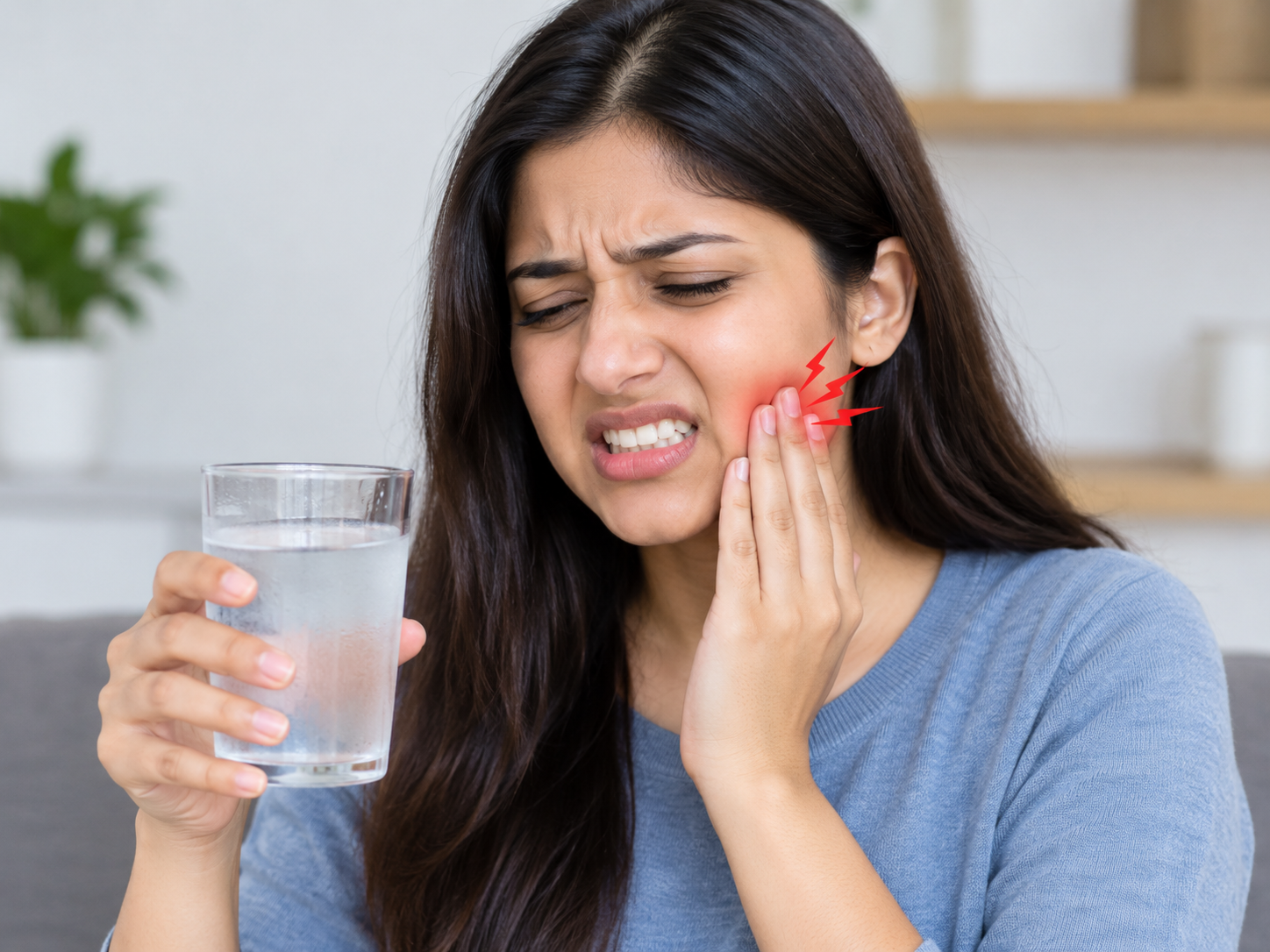
Sensitivity is a short, sharp pain when a tooth meets cold, sweet, acidic food, or even air. It happens when enamel wears thin or gums recede, exposing dentine - a softer layer full of tiny tubules that lead toward the nerve.
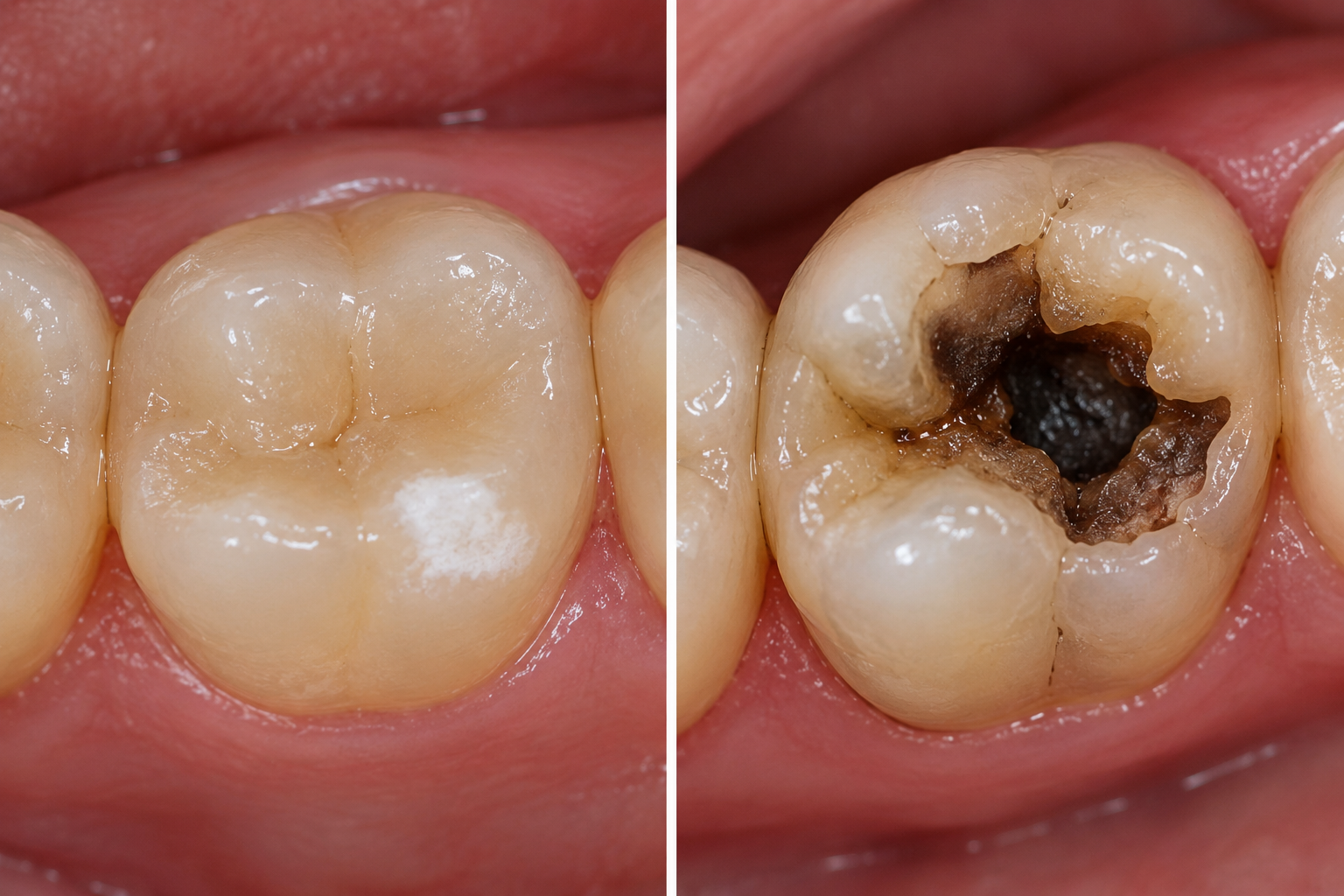
Everyday causes include brushing too hard, acidic drinks, grinding, gum disease, a cracked filling, or a cavity starting under an old restoration.
What you can try
- Switch to a soft brush and a toothpaste for sensitive teeth, used twice a day
- Don't brush right after citrus, soda, or wine - wait about 30 minutes
- Ease up on ice chewing and very acidic snacking
Mild sensitivity often settles in a few weeks. Pain that lingers after the trigger is gone, wakes you at night, or sits in one tooth is more likely decay or a crack - that's a dentist visit, not another toothpaste.
References
Grounded in standard dental textbooks and professional guidance. These are general sources, not a substitute for an in-person exam.
- Roberson TM, Heymann HO, Swift EJ. Sturdevant's Art and Science of Operative Dentistry.
- American Dental Association. Oral Health Topics.
This is general information written by a dentist, not personal medical advice. If you are in pain, swollen, or unsure, see a qualified dentist.