
Tooth & Cavities
Can Tooth Decay(Cavities) Be Reversed?
Written by Dr. Shalu, BDS
Last updated
Surprisingly, sometimes YES !
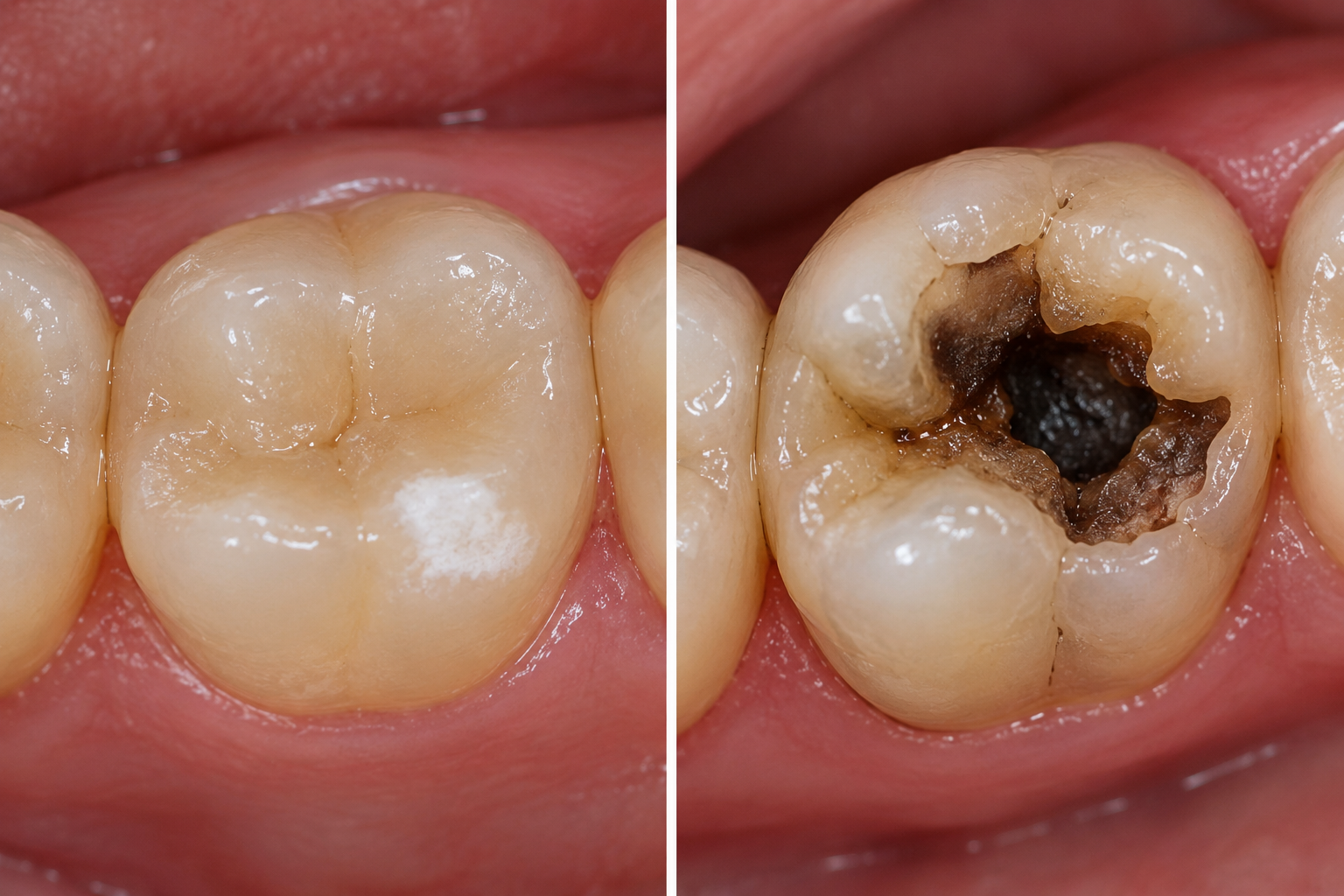
In the early stage, tooth decay may appear as white or chalky spots on the tooth surface. At this stage, the process can sometimes be arrested and the affected enamel may partially remineralize when the balance shifts toward remineralization. Using fluoride toothpaste, maintaining good oral hygiene, cleaning between the teeth, and limiting sugary foods and beverages** can help support this process. However, once cavitation (an actual structural defect or hole) has occurred, the lost tooth structure cannot biologically regenerate. Although the progression of the lesion may sometimes be arrested, a cavitated tooth generally requires professional restorative treatment.
HOW DOES A CAVITY DEVELOP ?
When you frequently eat or drink, especially sugary or starchy foods like sweets, soft drinks ,chips and other processed food items , the bacteria in your mouth produce acids. These acids attack your tooth enamel and remove important minerals. At first, you may notice a white spot on the tooth. This is an early sign of tooth decay. The good news? At this stage, decay can often be stopped or reversed. Saliva and fluoride from toothpaste help replace lost minerals and strengthen the enamel. But if acid attacks continue, more minerals are lost. The enamel becomes weaker and eventually breaks down, creating a cavity. Once a cavity forms, the damage is permanent and usually needs to be repaired by a dentist with a filling.
At-home steps to help reverse early tooth decay and prevent progression
- Brush Twice a Day: Brush your teeth twice daily for two minutes using a fluoride toothpaste. Fluoride helps strengthen enamel and supports the remineralization process.
- Flossing : Floss or use interdental brushes once a day to remove plaque and food particles from areas your toothbrush cannot reach.
- Clean Your Tongue:Gently clean your tongue regularly to help reduce the buildup of bacteria and debris.
- Avoid Frequent Snacking :Constant snacking or sipping throughout the day. Frequent exposure to carbohydrates and sugars can lead to repeated acid attacks on your teeth. Allowing adequate time between meals gives saliva an opportunity to help neutralize acids and support remineralization.
- Stay Well Hydrated: Drink enough plain water throughout the day. Saliva plays an important role in protecting teeth by neutralizing acids and supplying minerals that support enamel remineralization.
- Choose Sugar-Free Beverages
- Rinse With Water After Meals :Rinsing your mouth with water to help remove food debris and reduce the effects of acids
- Have your teeth professionally examined and cleaned as recommended by your dentist. **Twice-yearly dental visits** may be appropriate for many people, while some may need more frequent appointments depending on their oral-health risk.
- Oil Pulling :According to Ancient Ayurveda practice, Swishing for 5-15 minutes usually with organic coconut oil once daily can be helpful to reduce oral bacteria and good for gum health
- NOTE: Oil pulling may be used as an optional addition to your oral-care routine, but there is not enough evidence to show that it can reverse tooth decay. It should never replace fluoride toothpaste, brushing, or flossing.
This is general information written by a dentist, not personal medical advice. If you are in pain, swollen, or unsure, see a qualified dentist.