
Tooth & Cavities
Toothache: What should I do?
Written by Dr. Shalu, BDS
Last updated

- 1
Symptom
A dull ache, a sharp jolt on biting, or throbbing pain that makes it hard to eat or sleep. It may stay in one tooth or spread to the jaw, ear, or temple.
- 2
Possible causes
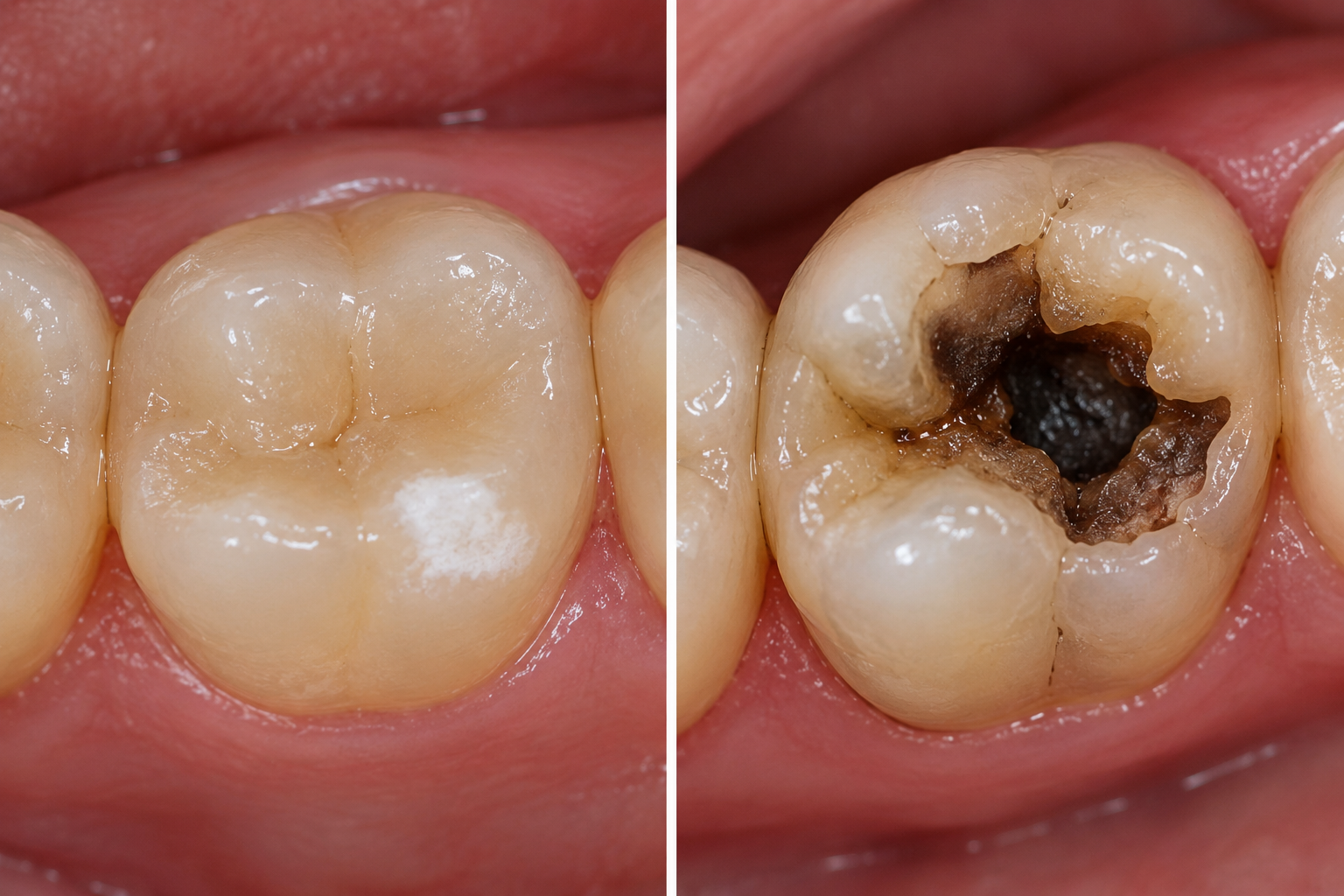
A cavity reaching the inner dentine or nerve · A cracked tooth or lost filling · Food trapped under the gum · An infection (abscess) at the root · Referred pain from sinuses or grinding
- 3
What you can do
Rinse with warm salt water and floss gently around the tooth · Take pain relief as directed on the pack - never place aspirin on the gum · Avoid very hot, cold, or sugary food on that side · Sleep with your head slightly raised if it throbs at night
- 4
When to see a dentist
The same day if pain is severe, wakes you, or comes with swelling or fever. Within a few days for any toothache that lasts more than 48 hours - waiting rarely makes a dying nerve feel better, and early treatment is simpler.
References
Grounded in standard dental textbooks and professional guidance. These are general sources, not a substitute for an in-person exam.
- Roberson TM, Heymann HO, Swift EJ. Sturdevant's Art and Science of Operative Dentistry.
- Hargreaves KM, Berman LH. Cohen's Pathways of the Pulp.
This is general information written by a dentist, not personal medical advice. If you are in pain, swollen, or unsure, see a qualified dentist.