
Wisdom Teeth
Wisdom Teeth: When They Cause Trouble (and When They Don't)
Written by Dr. Shalu, BDS
Last updated
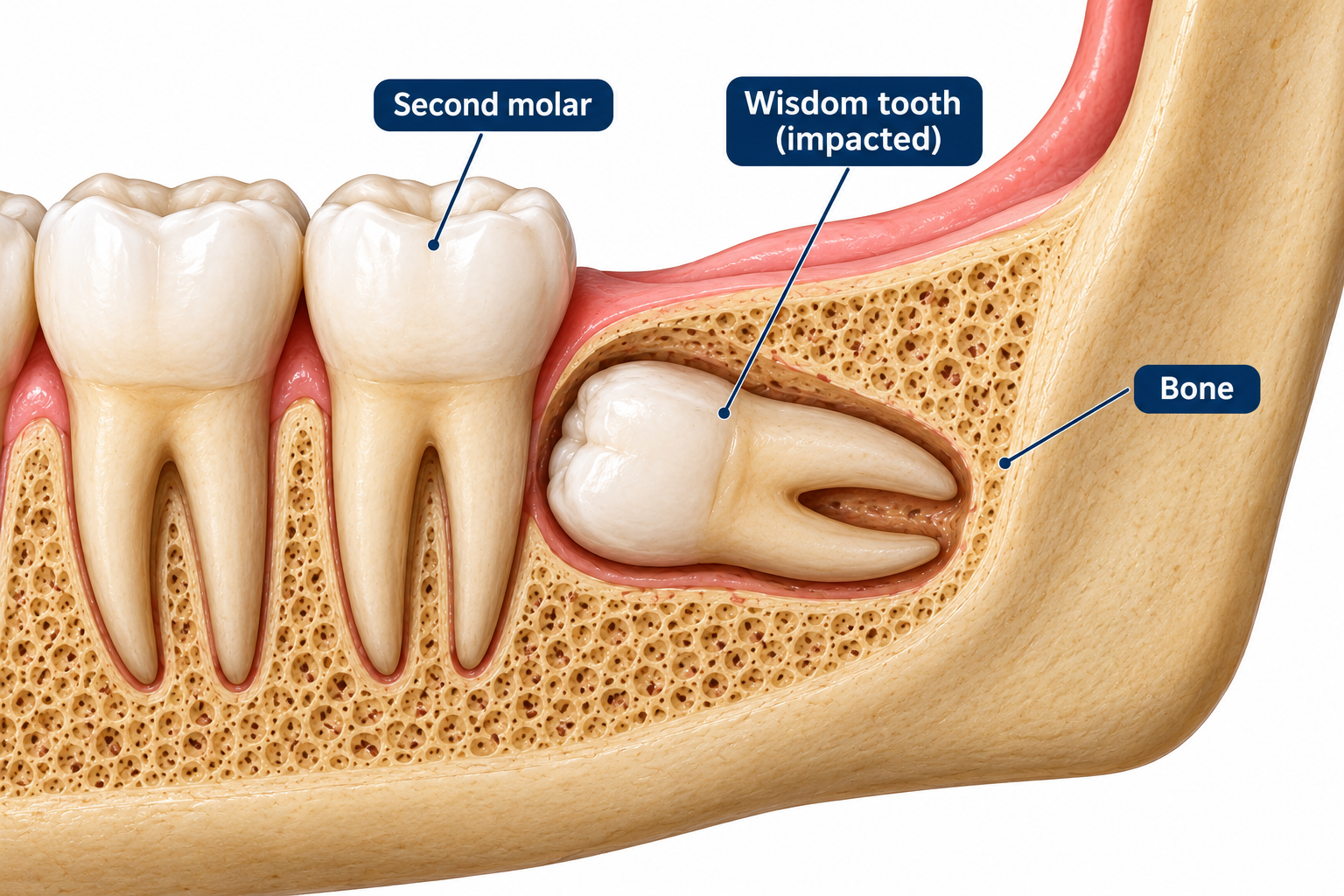
Wisdom teeth are the last molars to appear, usually between the ages of 17 and 25. For some people they emerge without any trouble - but for many, there simply isn't enough room, and they become “impacted,” growing at an angle or getting stuck against neighbouring teeth.
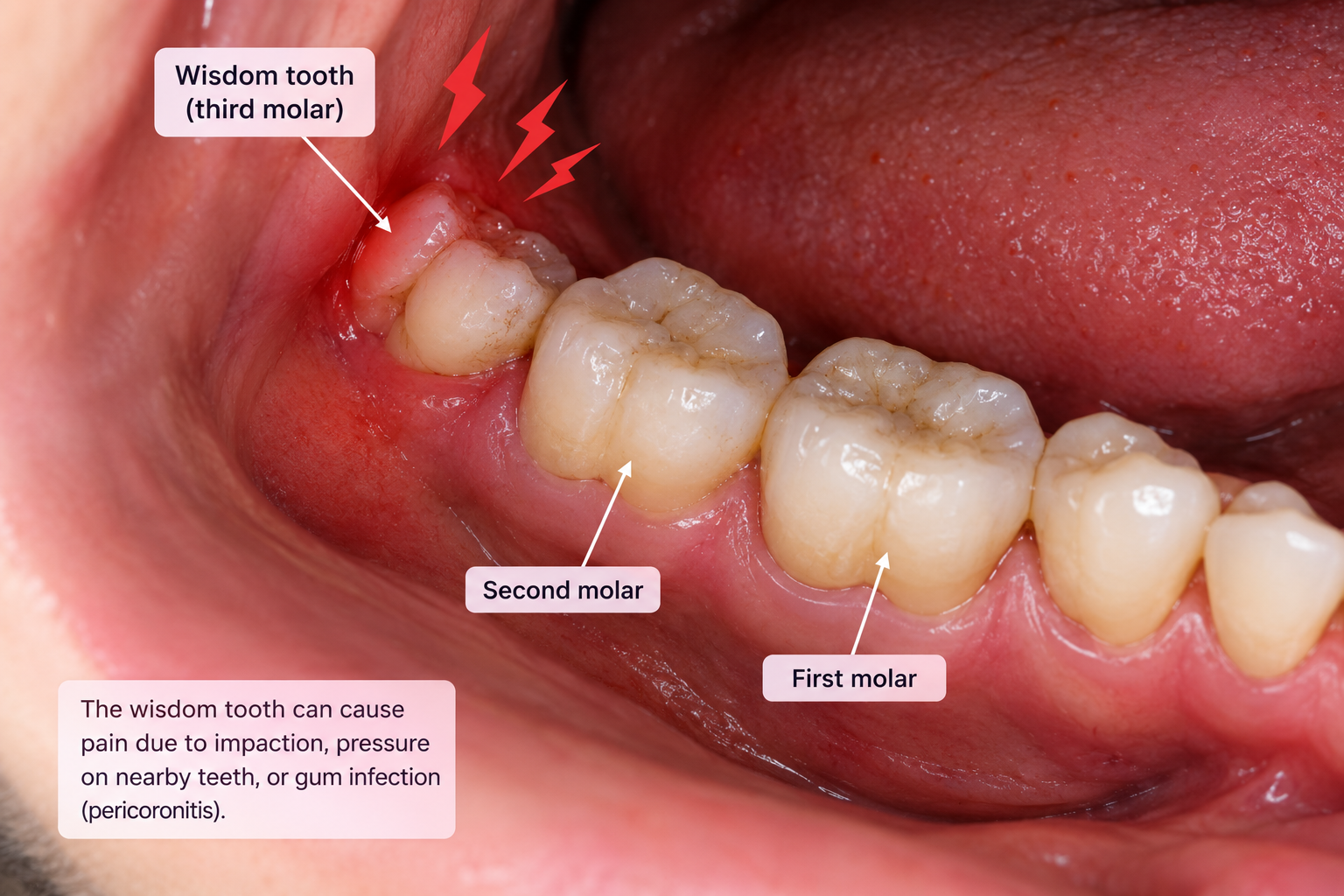
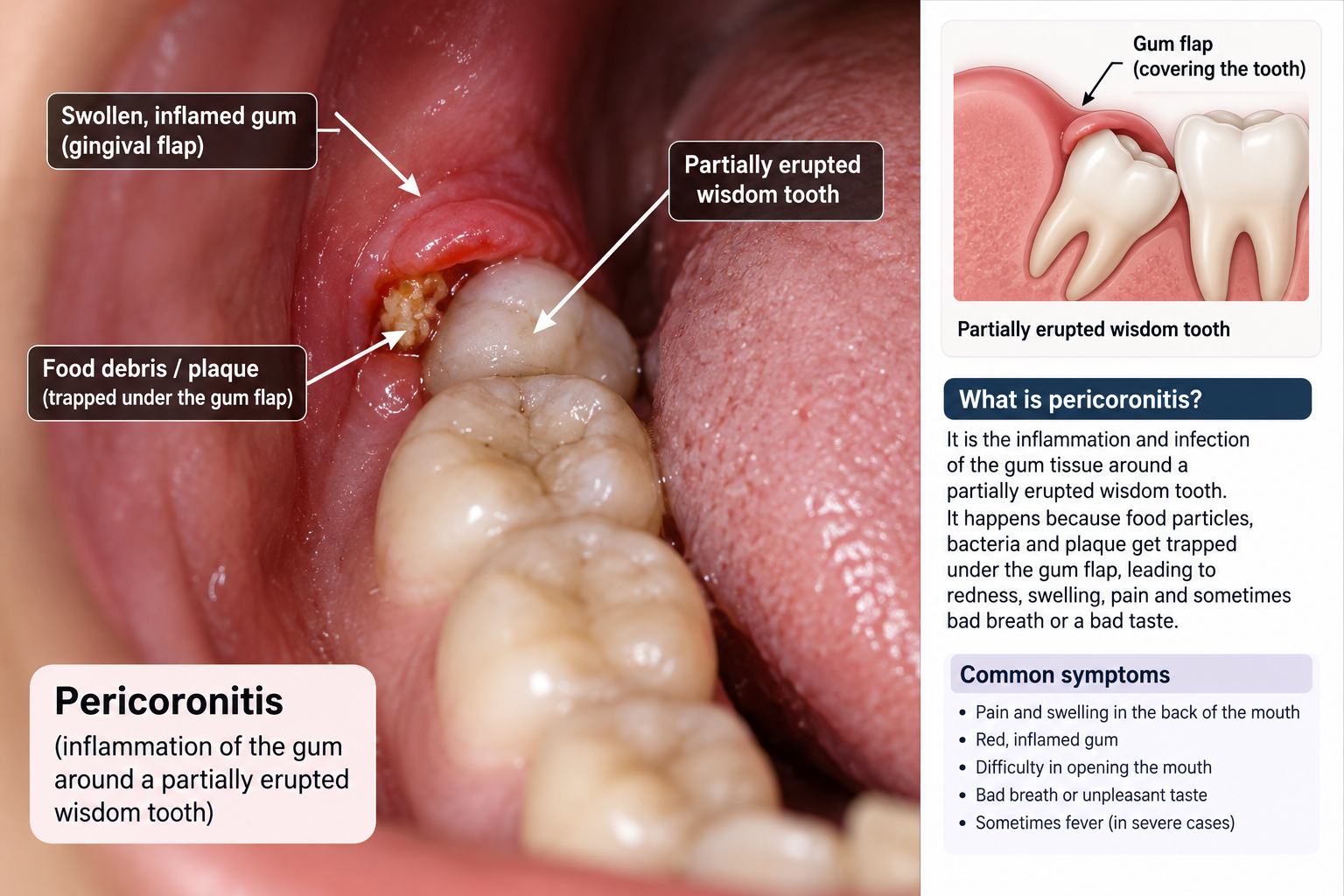
Signs to watch for include pain or tenderness at the back of the mouth, swelling, jaw stiffness, bad breath, or difficulty opening wide. Impacted wisdom teeth can also trap food and bacteria, leading to decay or gum infection.
Not every wisdom tooth needs removing - if it's healthy, well-positioned, and easy to clean, your dentist may simply monitor it. But when they cause pain, repeated infections, or crowding, extraction is usually recommended. A dental X-ray is the best way to see what's happening beneath the surface and plan the right course of action.
References
Grounded in standard dental textbooks and professional guidance. These are general sources, not a substitute for an in-person exam.
- Neville BW, Damm DD, Allen CM, Chi AC. Oral and Maxillofacial Pathology.
- Greenberg MS, Glick M, Ship JA. Burket's Oral Medicine.
This is general information written by a dentist, not personal medical advice. If you are in pain, swollen, or unsure, see a qualified dentist.